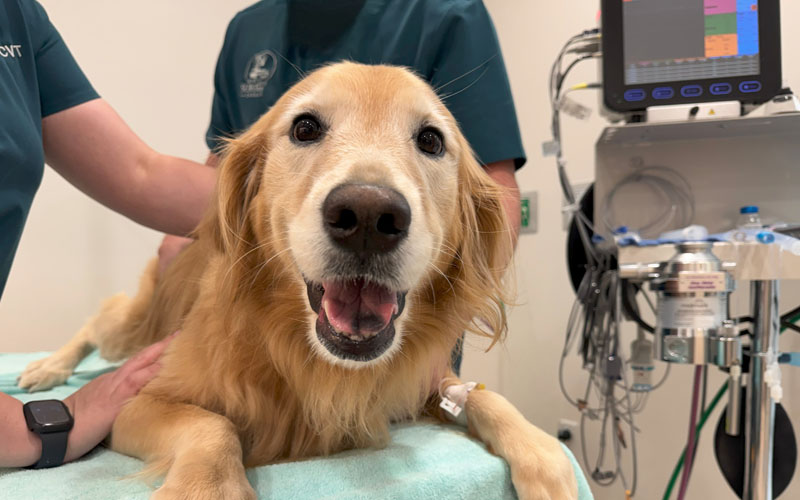
Splenectomy & Advanced Abdominal Surgery
Advanced abdominal surgery, specifically a Splenectomy, is one of the most common “major” soft tissue procedures performed by surgical groups. While it is often an emergency due to a ruptured mass, it can also be a planned elective procedure.
It is commonly recommended for masses, internal bleeding, gastrointestinal disease, or other serious abdominal conditions.
We combine advanced surgical expertise with careful perioperative care to support stability, recovery, and the best possible outcome.
Common Abdominal Surgery
Splenectomy (Spleen Removal)
The spleen acts as a blood filter and a reservoir for red blood cells. In dogs, it is prone to developing masses—some benign (like a hematoma/blood clot) and some malignant (like Hemangiosarcoma).
The Procedure
The "Rule of Two-Thirds"
Expected Outcome
- Benign: If the mass is benign (e.g., a hematoma), the surgery is 100% curative and the pet’s life expectancy returns to normal.
- Malignant: If cancerous, the surgery stops life-threatening internal bleeding and provides a high quality of life for several months, often extended with chemotherapy.
Liver Lobectomy
Advanced Tech
Expected Outcome
Nephrectomy (Kidney Removal)
The "Function Test"
Expected Outcome
Cholecystectomy (Gall Bladder Removal)
Common Indications for Surgery
Surgical Approach
Open Cholecystectomy
The traditional method involving a midline abdominal incision. Surgeons carefully dissect the gallbladder away from the liver and ligate the cystic duct.
Bile Duct Flushing
To ensure the remaining pathways are clear, surgeons may “flush” the common bile duct before finishing.
Laparoscopic Option
In some specialized centers, a minimally invasive approach using cameras and small ports can be used for stable, non-ruptured cases.
Expected Outcomes & Prognosis
- Elective vs. Emergency: Outcome is heavily dependent on the pet's stability at the time of surgery.
- Elective surgery: Performed before a rupture or severe illness; has a very low mortality rate, often around 2%.
- Emergency surgery: For ruptured cases carries a much higher risk, with mortality rates ranging from 20% to 39%.
- Long-Term Prognosis: For pets that survive the initial post-operative period (the first 1–2 weeks), the long-term prognosis is excellent. Dogs can live normal, healthy lives without a gallbladder.